Breath vs blood vs urine ketones: which should you test?
If you're trying keto, fasting, or just curious about your metabolism, you'll quickly run into three ways to check ketones: a finger-prick blood meter, urine strips, and a breath meter. They don't measure the same thing, and they don't answer the same question. Here's how each one works, where each one shines, and how to choose.
The short answer: blood meters give the most established single-moment number, urine strips are a cheap way to see whether ketones were present over the past few hours, and breath meters are a needle-free way to watch your trend across the day. If you have diabetes or any medical reason to check ketones, follow your healthcare team's advice and use the test they recommend.
First, why there are three tests
When carbohydrate is scarce (during fasting, a very low-carb diet, long exercise, or even overnight sleep), your liver turns fat into ketone bodies that your brain and muscles can use as fuel (Cleveland Clinic). There are three of them:
- Beta-hydroxybutyrate (BHB), the main ketone circulating in your blood.
- Acetoacetate, which spills into urine when levels rise.
- A small, volatile ketone that leaves your body through your lungs. That's what "breath ketones" refers to.
Because each test reads a different ketone in a different part of the body, the three methods tell you slightly different stories. That's not a flaw; it's the reason to pick the test that matches your question.
Blood ketone meters
How it works
A finger-prick meter measures BHB in a drop of capillary blood, much like a glucose meter. You get a number in millimoles per litre (mmol/L).
What it's good for
Blood BHB is the reference point most research uses. Nutritional ketosis is commonly defined as a blood BHB of 0.5 mmol/L or higher (Poff et al., 2020). For people with diabetes, the American Diabetes Association describes a blood ketone meter as the most accurate home option (ADA).
The trade-offs
Every reading costs a strip and a finger prick, so most people test once or twice a day. That matters, because ketone levels move around a lot. In one 14-day study, blood BHB varied by an average of 46% across a single day, and the authors concluded that a single measurement often isn't enough to describe someone's daily ketone exposure (Suntrup et al., 2020).
Urine ketone strips
How it works
You dip a strip in urine and compare its colour to a chart. The strip reacts to acetoacetate.
What it's good for
Strips are inexpensive and easy to find, which makes them a low-commitment way to check whether you've started producing ketones at all.
The trade-offs
Urine tests can't tell you your current ketone level; they reflect what your levels were over the last few hours (Cleveland Clinic). Results are a colour range rather than a precise number, and timing matters. In a study of adults in stable ketosis on a ketogenic diet, urine strips detected ketosis in more than 90% of people with early-morning and late-evening samples, but in only about half of people at some daytime checks (Urbain & Bertz, 2016). A negative strip at lunchtime doesn't necessarily mean you're out of ketosis.
Breath ketone meters
How it works
You breathe into a handheld device that reads breath ketones, the volatile ketone your body exhales as it uses fat for fuel.
What it's good for
No needles and no strips, so you can check as often as you like and see how your levels move across a day, for example before and after a meal, a fasting window, or a workout. Research suggests breath ketone levels track blood BHB. A review in Obesity summarised multiple studies reporting strong correlations between the two (Anderson, 2015), and a study of people on a 36-hour ketogenic diet found a breath sensor picked up the onset and progression of ketosis in line with finger-prick blood readings (Güntner et al., 2018).
The trade-offs
Breath and blood don't line up perfectly moment to moment. In the 14-day study above, single paired readings were only moderately correlated, while whole-day ketone exposure measured by breath and by blood was highly correlated. The authors suggest part of the gap is a time lag between the two (Suntrup et al., 2020). Breath readings are also affected by things like what you ate, calorie intake, exercise, and how you breathe into the device (Anderson, 2015).
Breath vs blood vs urine at a glance
| Blood meter | Urine strips | Breath meter | |
|---|---|---|---|
| What it reads | BHB in blood | Acetoacetate in urine | Breath ketones |
| Time window | Right now | Past few hours | Right now, best viewed as a trend |
| Needles or strips | Finger prick + strip each time | Strip each time | Neither |
| Output | Number (mmol/L) | Colour range | Device reading / trend |
| Best for | A precise single reading | A cheap yes/no starting check | Frequent, needle-free check-ins |
| Medical use (e.g. DKA risk) | Use as your care team advises | Use as your care team advises | Not a substitute |
So which should you test?
If you're just starting keto or a fasting routine
Urine strips or a breath meter are both low-friction ways to see whether your body has started making ketones. Many people find it more useful to look for a change from their own baseline than to chase a specific number.
If you want to understand your daily pattern
Because ketones rise and fall across the day, frequent readings give you a much richer picture than a single check. That's where a breath meter's "test as often as you like" format is most useful: you can see how a later dinner, a longer fasting window, or a morning workout shows up in your trend.
If you want one number to compare with research
A blood meter gives the BHB value that studies and guidelines usually refer to. Some people use a blood meter occasionally to get their bearings and breath or urine for day-to-day check-ins.
If you have diabetes or another medical reason to check ketones
Talk to your doctor and use the test your care team recommends, which for many people is a blood ketone meter (ADA). Wellness devices, including breath meters, are not designed to diagnose or monitor medical conditions.
Tips for more useful readings
- Test at consistent times, such as on waking and before dinner, so you're comparing like with like.
- Log context: meals, fasting windows, exercise and sleep all move ketones.
- Watch the trend, not one reading. A single high or low result says less than a week of readings.
- Follow the device instructions for each method (for breath, that usually means a steady, consistent exhale).
FAQ
Are breath ketones as accurate as blood ketones?
They measure different ketones, so they won't match number for number. Studies show breath readings track blood BHB, especially across a whole day, but single paired readings line up only moderately (Suntrup et al., 2020). Blood meters remain the reference for a precise single reading.
Why does my urine strip say negative when I feel like I'm in ketosis?
Urine strips reflect the past few hours and vary with time of day. In one study, detection was lowest at some daytime checks and highest in early-morning and late-evening urine (Urbain & Bertz, 2016).
What blood ketone level counts as nutritional ketosis?
Researchers commonly define nutritional ketosis as blood BHB of 0.5 mmol/L or higher (Poff et al., 2020).
Can I use a breath ketone meter if I have diabetes?
Ask your doctor first. Cleveland Clinic advises that people at risk of DKA should never rely on a breath device to check ketones (Cleveland Clinic).
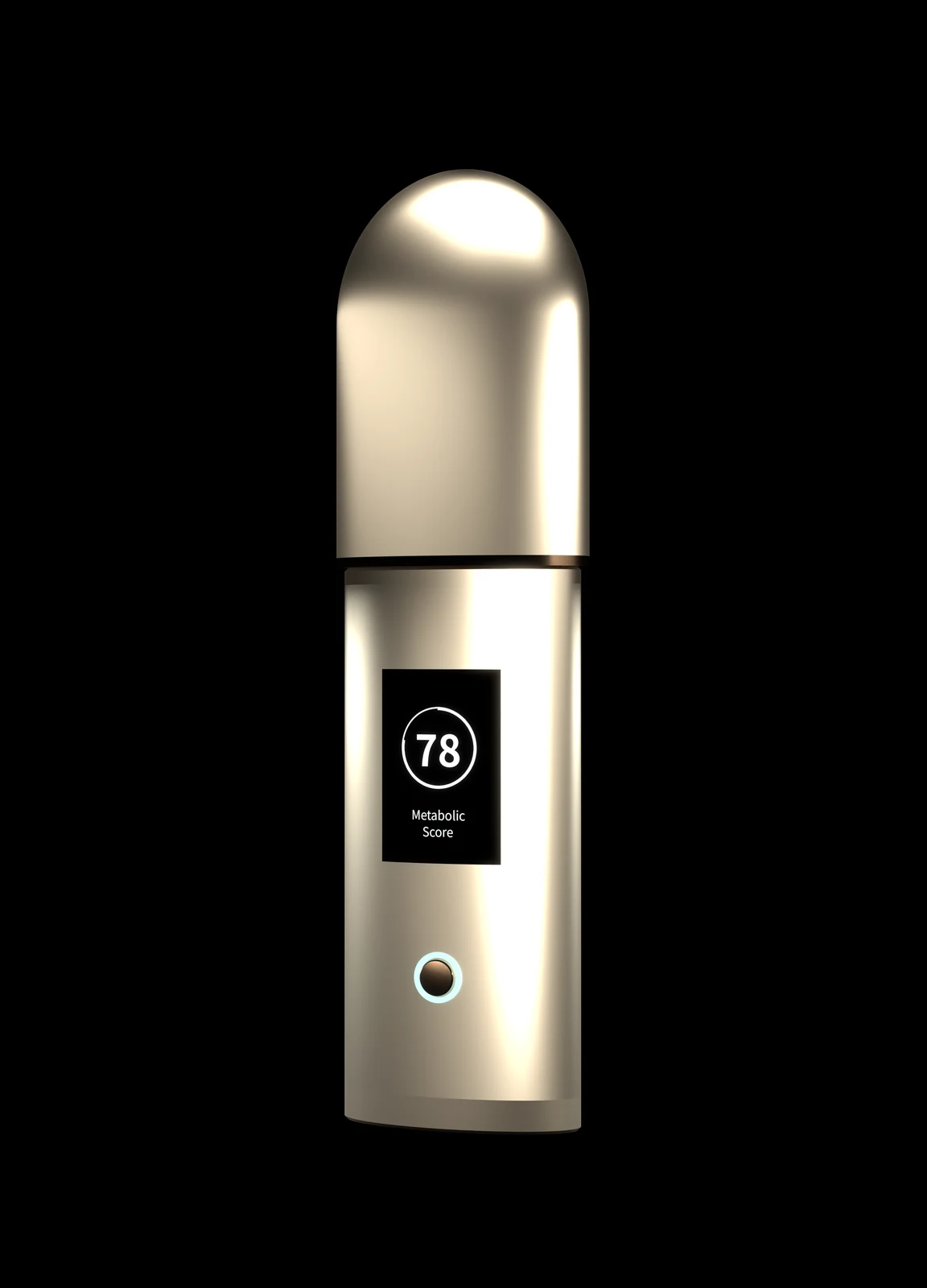
Where MitoX fits
MitoX is a pocket-size breath ketone analyzer paired with an AI coach. You can take as many readings a day as you like, see your trend across the day, and get guidance that adjusts to keto, fasting, or performance goals. It's built for everyday wellness check-ins, not medical testing. Join the waitlist for launch updates.
Wellness information, not medical advice. MitoX is a consumer wellness product. It is not a medical device and is not intended to diagnose, treat, cure, or prevent any disease. Talk to your doctor before changing your diet, fasting, or exercise routine, especially if you have a medical condition or take medication.
Sources
- Cleveland Clinic. Ketones: What They Are, Function, Tests & Normal Levels. https://my.clevelandclinic.org/health/body/25177-ketones
- American Diabetes Association. Managing Ketones with Diabetes. https://diabetes.org/living-with-diabetes/managing-ketones
- Poff AM, Koutnik AP, Egan B. Nutritional Ketosis with Ketogenic Diets or Exogenous Ketones: Features, Convergence, and Divergence. Curr Sports Med Rep. 2020;19(7):251-259. https://doi.org/10.1249/JSR.0000000000000732
- Urbain P, Bertz H. Monitoring for compliance with a ketogenic diet: what is the best time of day to test for urinary ketosis? Nutr Metab. 2016;13:77. https://pmc.ncbi.nlm.nih.gov/articles/PMC5097355/
- Suntrup DJ III, Ratto TV, Ratto M, McCarter JP. PeerJ. 2020;8:e9969 (14-day comparison of breath and blood ketone readings; authors disclose equity in a breath-meter company). https://doi.org/10.7717/peerj.9969
- Anderson JC. Obesity. 2015;23(12):2327-2334 (review of breath ketone measurement in healthy people). https://pmc.ncbi.nlm.nih.gov/articles/PMC4737348/
- Güntner AT, et al. Sensors. 2018;18(11):3655 (breath sensor study during a 36-hour ketogenic diet). https://pmc.ncbi.nlm.nih.gov/articles/PMC6264102/